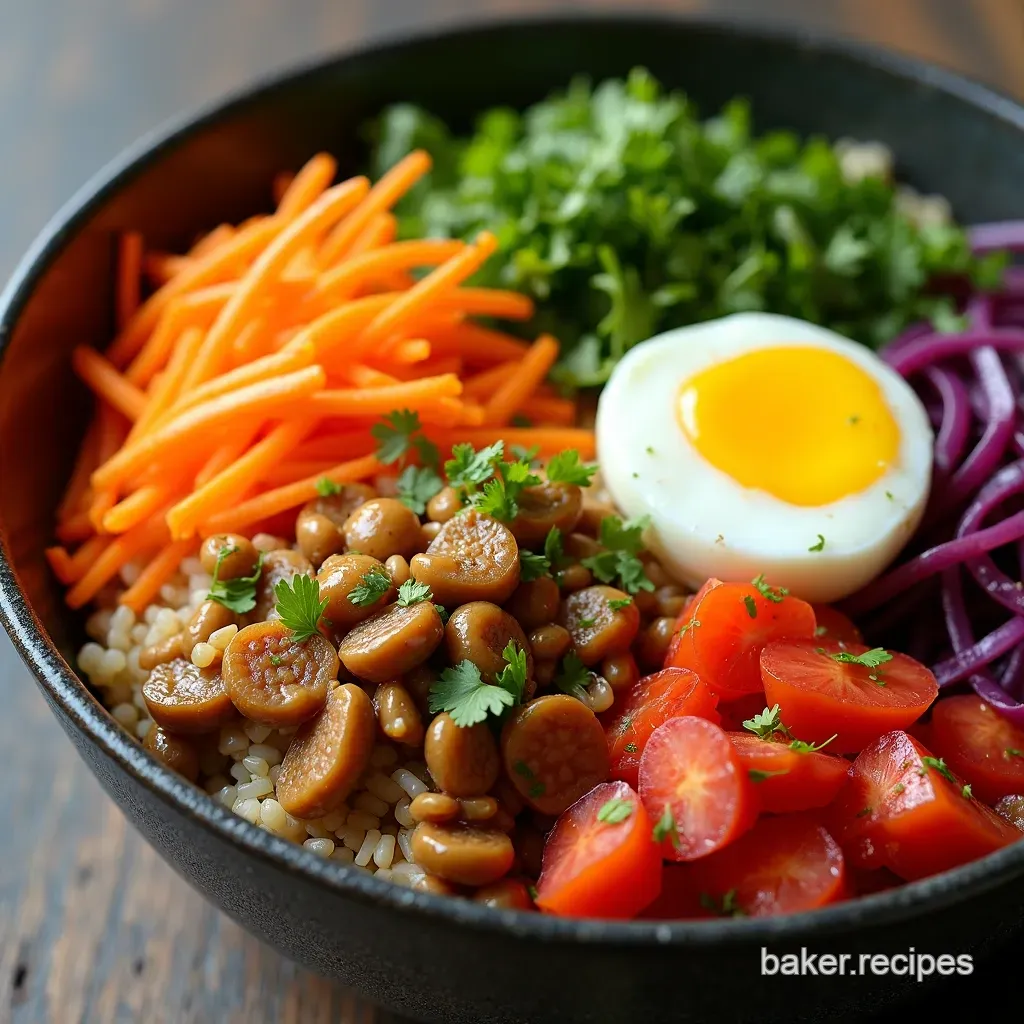
Embark on a culinary journey to Korea right from your kitchen with a bowl of Easy Vegetarian Rainbow Bibimbap: Customize Your Perfect Bowl. More than just a meal, bibimbap, which literally translates to "mixed rice," is a vibrant tapestry of textures, flavors, and colors. This ultimate Korean comfort bowl is a testament to mindful eating, combining nutritious vegetables, fluffy rice, and savory seasonings into a symphony that delights the senses. Our focus today is on the dazzling vegetarian rainbow bibimbap recipe – a meatless marvel that’s as wholesome as it is visually stunning, perfect for anyone seeking a healthful, satisfying, and utterly delicious dish.
The beauty of vegetarian bibimbap lies in its incredible versatility. It’s a dish that encourages creativity and makes the most of whatever fresh produce or even leftovers you have on hand. Imagine a mosaic of thinly sliced carrots, crisp cucumbers, tender spinach, earthy mushrooms, and chewy bean sprouts, all artfully arranged over a bed of warm rice. Crowned with a perfectly fried egg (or a vegan alternative) and drizzled with a rich, spicy gochujang sauce, each spoonful offers a harmonious blend of sweet, savory, spicy, and umami notes. It's truly a celebration of plant-based goodness, proving that comfort food can be both deeply nourishing and incredibly flavorful.
The Essence of Vegetarian Bibimbap: A Symphony of Flavors and Colors
At its heart, bibimbap is about balance. Traditional Korean cuisine emphasizes a variety of elements for both nutrition and taste, and this dish embodies that philosophy perfectly. Each component is typically prepared separately to bring out its unique flavor and texture before being united in the bowl. This meticulous preparation is what gives bibimbap its complex layers and satisfying mouthfeel.
Opting for a vegetarian version not only makes this dish accessible to a wider audience but also highlights the natural deliciousness of its plant-based ingredients. It's naturally rich in fiber, vitamins, and minerals, making it an excellent choice for a healthy meal. The "rainbow" aspect isn't just for show; it signifies a diverse range of nutrients that contribute to overall well-being. From the beta-carotene in carrots to the iron in spinach, and the protein from eggs or tofu, this bowl is a powerhouse of goodness. Furthermore, using a variety of vegetables aligns with sustainable eating practices, allowing you to adapt the recipe seasonally and reduce food waste by utilizing what's available.
Crafting Your Perfect Vegetarian Rainbow Bibimbap: Key Ingredients
The magic of a vegetarian rainbow bibimbap recipe begins with thoughtfully selected ingredients. While customization is key, certain staples form the backbone of this iconic dish.
The Foundation: Fluffy Rice
- Cooked Rice: Short-grain white rice is traditionally preferred for its slightly sticky texture, which helps to bind all the ingredients together. However, brown rice or even quinoa can be used for a healthier twist. This recipe is also a fantastic way to use up leftover cooked rice, giving it new life and saving you prep time. Day-old rice often has a firmer texture, which prevents it from becoming mushy when mixed with the saucy ingredients.
The Vibrant Ensemble: Fresh Vegetables
The "rainbow" truly comes alive with a medley of fresh vegetables. Our foundational choices include:
- Carrots: Julienne-cut carrots add a touch of sweetness and vibrant orange.
- Cucumbers: Thinly sliced cucumbers provide a refreshing crunch and cool contrast.
- Spinach: Quickly wilted spinach adds an earthy, slightly bitter note and a beautiful green hue.
- Bean Sprouts: Blanched bean sprouts contribute a delightful crispness and a mild, nutty flavor.
- Scallions: Chopped scallions serve as a fresh, aromatic garnish, offering a mild oniony bite.
- Customization Tip: Don't hesitate to add other vegetables like zucchini matchsticks, bell peppers, or shredded radish for even more color and variety.
Umami Powerhouses: Mushrooms
- Mushrooms: Shiitake mushrooms are classic for their deep, earthy umami flavor. However, button, cremini, or oyster mushrooms work equally well, bringing their own unique nuances to the bowl. Sautéing them properly is crucial to developing their rich flavor and tender texture.
Protein Punch: Eggs (and Vegan Alternatives)
- Eggs: A sunny-side-up fried egg is the quintessential bibimbap topping. Its runny yolk acts as a natural sauce, enriching the entire dish. A bit of vegetable oil is needed for frying.
- Vegan Option: For a truly vegan bowl, firm tofu (marinated and pan-fried), tempeh, or even a chickpea "egg" scramble can serve as an excellent protein substitute, offering similar textural satisfaction.
The Soul of the Dish: Gochujang Sauce
This spicy, savory, and slightly sweet sauce is what ties all the elements of bibimbap together. It’s not just a condiment; it’s the dish's vibrant heart.
- Gochujang Paste: The star ingredient, a fermented Korean chili paste that provides depth and heat.
- Maple Syrup: Adds a touch of sweetness to balance the spice (honey or brown sugar can also be used).
- Sesame Oil: Contributes a nutty aroma and a silky mouthfeel.
- Rice Vinegar: A hint of acidity brightens the sauce and cuts through the richness.
Essential Flavor Boosters
- Sesame Oil: Used throughout the cooking process for its distinctive nutty fragrance.
- Tamari/Soy Sauce: For seasoning vegetables and adding savory depth. Tamari is a gluten-free alternative to soy sauce.
- Butter: A small amount often used for sautéing mushrooms, adding richness and enhancing their umami.
- Sesame Seeds: Both black and white sesame seeds are used as a garnish, adding visual appeal and a delicate crunch.
- Kimchi: While optional, a side of kimchi (fermented spicy cabbage) offers an extra layer of tang and spice, complementing the bibimbap beautifully and adding beneficial probiotics.
Step-by-Step Guide to Assembling Your Bibimbap Masterpiece
The preparation of bibimbap is a sequential process, often involving preparing each component separately before the final assembly. This method ensures each ingredient retains its distinct character.
Rice Preparation: The Unsung Hero
If you don’t have leftover rice, start by cooking short-grain rice according to package directions. Once cooked, let it steam, covered, for a few extra minutes off the heat. This helps create that perfect fluffy texture. Freshly cooked rice should be slightly cooled to prevent the overall dish from becoming too hot and mushy when mixed.
Prepping Your Rainbow Veggies: A Station-by-Station Approach
Efficiency is key here. Work through your vegetables in a logical order:
- Spinach: In a dry skillet over low heat, gently sauté the spinach until it wilts, usually about one minute. Season lightly with a splash of sesame oil and tamari/soy sauce, then set aside. The goal is just to soften it, not to cook it down completely.
- Carrots: Shred the carrots into fine matchsticks using a julienne peeler or a grater. Lightly sauté them in a touch of sesame oil over medium heat until they soften slightly, about 1-2 minutes. You want them tender-crisp.
- Cucumbers: Thinly slice the cucumber, either into rounds or matchsticks. Marinate them briefly in a small bowl with a drizzle of rice vinegar and sesame oil. This adds a lovely tangy, nutty note and helps soften them.
- Bean Sprouts: Bring a small pot of water to a boil. Blanch the bean sprouts for just 1 minute. Immediately drain them and rinse with cold water to stop the cooking, which ensures a delightful crunch in the final dish.
- Mushrooms: Thinly slice your chosen mushrooms. Sauté them in a dry pan first to allow them to release their moisture. Once they start to brown, add a knob of butter (or more oil for vegan) and a splash of tamari/soy sauce and rice vinegar. Stir-fry for 1-2 minutes until beautifully caramelized and tender, enhancing their rich umami flavor.
- Eggs: In a non-stick skillet, fry one egg per person with a bit of vegetable oil. Cook for 3-4 minutes for a perfect sunny-side-up egg with a slightly runny yolk, or to your preferred doneness.
- Gochujang Sauce: In a small bowl, whisk together the gochujang paste, maple syrup, sesame oil, and rice vinegar until well combined. This can be adjusted to your taste preference for sweetness and spice.
- Scallions: Finely chop the scallions for garnish.
The Grand Assembly: Layering for Visual and Gustatory Delight
Now comes the satisfying part – assembling your bowls! In individual serving bowls, create your vibrant masterpiece:
- Start with a generous bed of warm rice at the bottom.
- Artfully arrange your prepared vegetables (spinach, carrots, cucumbers, bean sprouts, mushrooms) in separate sections around the rice, creating that beautiful "rainbow" effect.
- Gently place a fried egg on top, right in the center.
- Drizzle a spoonful of your homemade gochujang sauce over the egg and vegetables.
- Garnish generously with toasted sesame seeds and fresh chopped scallions.
- Serve immediately, preferably with a side of kimchi, and encourage diners to mix everything together before eating to enjoy the full medley of flavors and textures in every bite!
Beyond the Recipe: Tips for Customization and Culinary Creativity
The true beauty of a vegetarian rainbow bibimbap recipe lies in its adaptability. Don't feel confined to the ingredients listed; think of them as a starting point for your culinary adventure.
- Leftover Magic: This dish is a hero for using up small amounts of leftover cooked vegetables. Stir-fry any sad-looking greens or roast any forgotten roots, and they'll find a happy home in your bibimbap.
- Seasonal Produce: Embrace the seasons! In spring, add asparagus or snap peas. Summer might bring zucchini and bell peppers. Fall could feature roasted squash or root vegetables, while winter could highlight kale or hardy greens.
- Vegan Swaps: As mentioned, tofu or tempeh are excellent egg substitutes. For butter, simply use more vegetable oil or a vegan butter alternative. Ensure your gochujang is vegan-friendly (most are, but always check labels).
- Adding Different Textures: For extra crunch, consider adding toasted nuts like cashews or peanuts, or some thinly sliced seaweed (gim). A sprinkling of microgreens can also add freshness and a gourmet touch.
- Sauce Variations: While the gochujang sauce is traditional, you can customize it further. Add a touch of garlic, ginger, or even a tiny bit of peanut butter for a richer, more complex flavor profile. For those who prefer less spice, a savory soy-sesame dressing can be a delicious alternative.
- Speedy Prep: To make this a weeknight-friendly meal, consider prepping your vegetables in advance. Blanching bean sprouts and spinach, slicing carrots and cucumbers, and preparing the gochujang sauce can all be done a day or two ahead. This transforms the assembly into a quick, last-minute affair, making it a Mastering Vegetarian Bibimbap: Quick Tips for a Healthy Meal.
Vibrant Vegetarian Bibimbap is more than just a meal; it's an experience. It's a celebration of fresh ingredients, balanced flavors, and colorful presentation, all coming together in one satisfying bowl. Whether you’re an experienced cook or just starting your culinary journey, this vegetarian rainbow bibimbap recipe offers endless possibilities for delicious, healthy, and creative eating. So gather your ingredients, unleash your inner chef, and prepare to mix your way to Korean comfort food bliss!
